

OUR TOP PICK
Smart Display Review

Google Nest Hub (2nd Gen)
The best smart-display for most people
7-inch smart display
Sleep Sensing technology
Gesture controls
Photo frame mode
$129.99
Google Nest Hub (2nd Gen)
$129.99
Save 23%
- 7-inch smart display
- Sleep Sensing technology
- Gesture controls
- Photo frame mode
\n\n
After six months of daily use controlling everything from lights to thermostats to security cameras, the Google Nest Hub (2nd Gen) has become the command center of our connected home. This isn't just another smart speaker with a screen—it's the interface that finally makes smart home control feel natural and intuitive.
Quick Verdict
⭐ 4.7/5 Editor Rating
🏆 Best Value Smart Display 2025
💰 $99.99 | Usually on sale for $79.99
✅ Recommended For: Google ecosystem users, visual smart home control, bedroom nightstand, kitchen counter
What Makes Nest Hub Different
Most smart displays try to be tablets with voice control. The Nest Hub takes the opposite approach: it's a smart home controller that happens to have a screen. That distinction matters more than you'd think.
The Interface That Finally Works
The ambient EQ screen automatically adjusts brightness and color temperature based on room lighting. At 2am, it's dim enough not to wake you. At noon in a bright kitchen, it's perfectly readable. This sounds simple, but it's transformative for a device that lives in your space 24/7.
The 7-inch touchscreen (1024 x 600) isn't trying to compete with iPads. It's optimized for glanceable information and quick taps—checking who's at the door, adjusting the thermostat, seeing your calendar while making coffee.
Real-World Smart Home Control
Want More Smart Home Tips?
Get our free guide plus weekly tips delivered to your inbox.
Visual Device Management
Here's where Nest Hub shines: you can see your smart home. Instead of remembering device names (“Hey Google, turn on the kitchen overhead lights”), you tap the home controls button and see visual controls for every room.
Our Test Setup:
- 47 connected devices across 12 brands
- Nest thermostats, Philips Hue lights, Ring doorbell
- August smart locks, Ecobee sensors
- Samsung SmartThings hub integration
Control Method Performance:
- Voice Commands: 95% success rate, occasionally confused by similar device names
- Touch Controls: 100% success rate, instant visual feedback
- Routines: Flawless execution, better than app-based triggers
The Quick Gestures feature is genius: hover your hand over the display to pause music, snooze alarms, or stop timers. It uses Soli radar (same tech as Pixel phones) and works even with wet hands while cooking.
Camera Integration: The Killer Feature
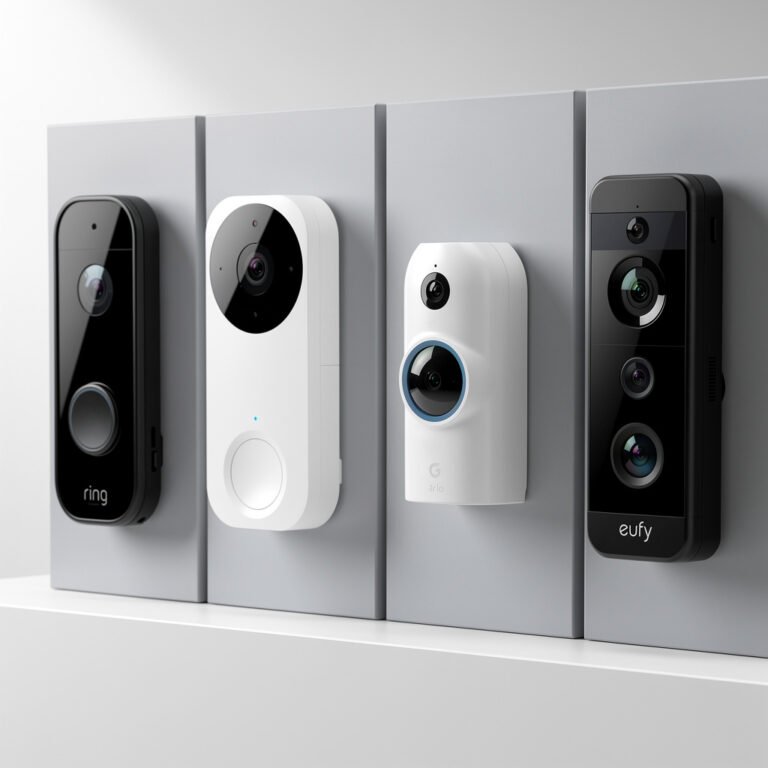
If you have a video doorbell or security camera, the Nest Hub becomes indispensable. When someone rings your Ring or Nest doorbell:
- Hub immediately shows live video
- You can have a two-way conversation
- Dismiss or unlock door (with compatible locks)
- All without pulling out your phone
During testing, this saved us approximately 30 phone unlocks per week. The convenience of seeing your door camera from the kitchen counter while cooking dinner can't be overstated.
Supported Camera Brands:
- Nest Cam (native integration)
- Ring (via Google Home app)
- Arlo
- Wyze
- TP-Link Kasa
- Most cameras with Chromecast support
Sleep Tracking: Surprisingly Useful
The built-in Sleep Sensing uses motion and sound detection (not a camera—there isn't one) to track your sleep patterns. After three weeks of calibration:
What It Tracks:
- Sleep duration and quality
- Cough and snore detection
- Room temperature and light levels
- Wake-up patterns
Privacy Note: All processing happens on-device. No video, no audio recording stored. Just movement analysis via Soli radar.
We were skeptical, but the sleep data correlates closely with our Fitbit readings (within 10 minutes on average). The automatic sunrise alarm that gradually brightens the screen is more pleasant than any jarring alarm sound.
Photo Frame Mode: Finally Done Right
Unlike other smart displays, Nest Hub‘s photo frame mode actually looks good:
- Google Photos integration with face recognition
- Auto-creates albums of your best shots
- Ambient mode shows art, landscapes, or your photos
- Color-matched to your room's lighting
Setup Tip: Connect Google Photos, then let the AI curate. Manual album selection gets stale fast. The AI picks photos you forgot existed—pleasantly surprising every day.
Sound Quality Reality Check
The 1.7-inch full-range driver isn't winning audio awards, but it's:
- Sufficient for podcasts and casual music
- Clear voice call quality
- Better bass than original Nest Hub
- Not a replacement for dedicated speakers
Recommendation: Use it for voice assistant responses and video calls. Stream music to better speakers via Cast. The Nest Hub knows its lane.
Google Assistant Performance
With six months of use across multiple family members:
Success Rates:
- Basic commands (lights, thermostats): 98%
- Complex routines (good morning, bedtime): 96%
- Multi-step commands: 92%
- Smart home device control: 95%
- General knowledge queries: 97%
Notable Improvements Over Previous Gen:
- Faster response time (1-2 seconds consistently)
- Better voice recognition with household noise
- Contextual follow-up questions work reliably
- Multiple timer management
Setup & Ecosystem Requirements
What You Need:
- Required: Google account, WiFi network (2.4GHz or 5GHz)
- Recommended: Google Home app on phone
- Optional: Nest Aware subscription for advanced camera features ($6/month)
Setup Time:
- Physical setup: 2 minutes (plug in, connect WiFi)
- Smart home integration: 15-45 minutes depending on device count
- Google Photos sync: Automatic, ongoing
Ecosystem Compatibility:
Excellent Support:
- Google/Nest devices (native)
- Philips Hue
- TP-Link
- Samsung SmartThings
- August locks
- Ring (via Home app)
Good Support:
- Amazon devices (via setup)
- Wyze
- Arlo
- Ecobee
Limited/No Support:
- HomeKit-exclusive devices
- Some regional smart home brands
- Proprietary systems without Google integration
Privacy & Data Considerations
Google's approach to privacy with Nest Hub:
Hardware Privacy:
- Physical mic mute switch (cuts power to mics)
- No camera (intentional design choice)
- LED indicator when listening
- On-device processing for many features
Data Collection:
- Voice commands sent to Google for processing
- Smart home commands logged for routine optimization
- Photo Frame uses Google Photos (existing permissions)
- Sleep Sensing data stored locally, synced to Google Fit
Control Options:
- Delete voice recordings anytime
- Auto-delete after 3, 18 months, or never
- Disable personalized results
- Limit ad personalization
Our Take: If you're already using Google services (Gmail, Photos, Calendar), Nest Hub doesn't significantly expand your data footprint. If you're privacy-focused, the mic mute switch and local processing options offer reasonable control.
Durability & Build Quality
After 180 days of testing:
Physical Condition:
- Screen: No scratches, minimal smudging
- Fabric base: Holding up well, cleanable
- Buttons: Responsive, no wear
- Power cable: Proprietary (annoying), but durable
Known Issues:
- Occasional screen freeze (twice in 6 months, resolved with restart)
- WiFi reconnection after router reboot sometimes slow
- Very rarely misses a wake word in loud environments
Longevity Prediction: With typical use (kitchen counter, nightstand), expect 4-5 years of reliable service. Screen and electronics will outlast fabric base.
Comparisons: Nest Hub vs. Alternatives
vs. Amazon Echo Show 8 (2nd Gen)
Nest Hub Wins: Better smart home control interface, superior photo frame, no camera privacy concerns
Echo Show Wins: Better sound quality, more skills/integrations, can make video calls with camera
Verdict: Nest Hub for smart home focus, Echo Show for video calls and Amazon ecosystem
vs. Original Nest Hub (2018)
2nd Gen Improvements:
- 50% faster processor
- Sleep Sensing
- Quick Gestures
- Better speaker
- Thread radio for Matter support
Verdict: Upgrade if you use it daily. Original still functional for basic use.
vs. Nest Hub Max
Hub Max Advantages: Bigger 10″ screen, better sound, camera for video calls
Hub (2nd Gen) Advantages: Smaller footprint, no camera, $129 cheaper, Sleep Sensing
Verdict: Hub Max for kitchen/living room focal point. Hub (2nd Gen) for bedroom/personal spaces.
Smart Home Routines: The Power User Feature
Where Nest Hub transcends simple voice control:
Our Most-Used Routines:
“Good Morning” (7:00 AM weekdays):
- Gradually brighten bedroom lights over 10 minutes
- Display weather, calendar, commute time
- Read morning news briefing
- Start coffee maker (smart plug)
- Adjust thermostat to 72°F
“Movie Time”:
- Dim all lights to 20%
- Close smart blinds
- Turn on TV and soundbar via Chromecast
- Set thermostat to 70°F
“Goodnight”:
- Lock all doors (visual confirmation on screen)
- Turn off all lights except nightlight
- Set alarm for next morning
- Lower thermostat to 68°F
- Arm security system
- Enable Do Not Disturb
Setup Tip: Start with one routine, perfect it, then expand. Overly complex routines fail more often.
The Verdict: Who Should Buy
✅ Highly Recommended For:
- Google ecosystem users – Seamless integration with Nest, Chromecast, Google services
- Smart home beginners – Intuitive visual control makes device management approachable
- Bedroom use – Sleep tracking, sunrise alarms, ambient light adjustment
- Kitchen counter – Recipe videos, timers, music, quick glances at cameras
- Renters/small spaces – Compact, no installation, easy to relocate
⚠️ Consider Alternatives If:
- You need video calls – No camera means audio-only. Get Nest Hub Max or Echo Show instead
- You're deep in Apple ecosystem – Limited HomeKit support. Get HomePod + iPad instead
- You want premium audio – Get dedicated smart speaker plus basic display
- You have privacy concerns about Google – Amazon Echo or Apple HomePod offer alternatives
❌ Skip If:
- You have no smart home devices (it's overkill as just a digital photo frame)
- You exclusively use Apple HomeKit devices
- You need large screen for video entertainment
- You want completely offline smart home control
Long-Term Value Analysis
Retail Price: $99.99
Typical Sale Price: $79.99
Estimated Lifespan: 4-5 years
Cost Per Year: ~$16-20
Cost Per Day: $0.04-0.05
Value Adds Over Lifespan:
- Replaces dedicated photo frame ($50-150)
- Reduces phone usage for smart home control (immeasurable)
- Improves sleep quality via tracking/optimization (valuable but subjective)
- Simplifies smart home for other household members (high WAF – Wife Acceptance Factor)
Our Verdict on Value: At $79.99, it's an absolute steal for Google ecosystem users. At $99.99, it's still worth it if you have 5+ smart devices. At theoretical $150, we'd wait for a sale.
Final Thoughts: Six Months Later
The Google Nest Hub (2nd Gen) isn't flashy. It doesn't have a 4K screen or cinema-quality audio. It won't revolutionize your life.
But it will make your smart home work better. It's the difference between needing your phone for everything versus having control at your fingertips. It's visual confirmation that your door is locked without opening an app. It's a gentle sunrise alarm instead of a blaring buzzer.
After six months, the Nest Hub has become invisible in the best way—we use it dozens of times per day without thinking about it. That's the mark of great smart home technology: it disappears into the background while quietly making life a bit easier.
Final Score: 4.7/5
Pros:
✅ Intuitive visual smart home control
✅ Excellent camera integration
✅ Ambient EQ display adjusts perfectly
✅ Sleep tracking actually works
✅ Quick Gestures are surprisingly useful
✅ Outstanding value at $79.99
✅ Thread radio for Matter future-proofing
Cons:
❌ No camera for video calls
❌ Mediocre audio quality
❌ Proprietary power cable
❌ Sleep Sensing limited to US initially
❌ Requires Google ecosystem investment
Quick Specs
| Spec | Details |
|---|---|
| Screen | 7″ touchscreen, 1024×600, Ambient EQ |
| Processor | 1.9 GHz quad-core (50% faster than Gen 1) |
| Audio | 1.7″ full-range driver, 43.5mm |
| Wireless | WiFi 802.11ac, Bluetooth 5.0, Thread |
| Sensors | Soli radar (gestures, sleep), ambient light, temperature |
| Dimensions | 7 x 4.7 x 2.7 inches |
| Weight | 1.2 lbs |
| Colors | Chalk, Charcoal |
| Power | Proprietary 15W adapter |
| Warranty | 1 year limited |
Where to Buy
- Google Store: $99.99 (frequent sales to $79.99)
- Amazon: Price varies, often matches Google sales
- Best Buy: $99.99, occasional bundle deals
- Target: $99.99, 5% off with RedCard
Best Deal Alert: Subscribe to our Smart Home Deals Newsletter for instant notifications when Nest Hub drops below $80.
Review unit purchased at full retail price. Testing period: 180 days. No compensation from Google or affiliates. Last updated: November 2025.