

A smart bedroom transforms how you sleep, wake, and unwind. Unlike other rooms focused on entertainment or productivity, bedroom automation prioritizes comfort, sleep quality, and gentle transitions. The goal: technology that helps you rest better without intruding on your sanctuary.
This guide covers everything from essential devices to sleep-enhancing automations that work quietly in the background.
Smart Bedroom Essentials
1. Smart Lighting (Sleep-Focused)
Bedroom lighting needs differ from the rest of your home. Focus on:
- Warm color temperature: 2700K or warmer for evening use
- Dimming capability: Gradual dimming for wind-down routines
- Gentle wake-up: Sunrise simulation in the morning
- Low blue light: Nightstand bulbs that minimize sleep disruption
Top Picks:
- Philips Hue White Ambiance: $25/bulb – Excellent tunable white, sunrise/sunset
- LIFX Mini Day & Dusk: $30 – No hub, great color temperature range
- Nanoleaf Essentials: $20 – Thread/Matter, works with all platforms
- Caseta dimmer switch: $60 – If you prefer wall switches
Setup tip: Use nightstand lamps for evening reading, ceiling lights for morning brightness.
2. Voice Controller (Bedroom-Appropriate)
Choose a bedroom-appropriate smart speaker:
- Echo Dot with Clock: $60 – Small, shows time, sleep sounds
- Google Nest Hub (2nd Gen): $100 – Sleep sensing, no camera
- HomePod Mini: $99 – Compact, great audio
Privacy note: Many people prefer speakers without cameras in the bedroom. The Google Nest Hub (2nd gen) intentionally has no camera. Echo devices have physical mute buttons.
3. Smart Plugs for Bedside
Control lamps, fans, and chargers:
- Phone/tablet charger: Auto-off at full charge or bedtime
- White noise machine: Turn on/off with voice or schedule
- Bedside fan: Voice control without getting up
- Holiday string lights: Cozy ambiance on schedule
4. Smart Temperature Control
Temperature significantly impacts sleep quality. Options include:
- Smart thermostat room sensor: Ecobee sensors prioritize bedroom at night
- Smart fan: Ceiling or standing fan with voice/schedule control
- Eight Sleep Pod: $2000+ – Heated/cooled mattress cover (premium)
- ChiliSleep Dock Pro: $700+ – Water-based bed cooling/heating
Sleep Enhancement Upgrades
Sunrise Alarm / Wake-Up Light
Gentle light-based waking is more natural than jarring alarms:
- Philips SmartSleep Wake-Up Light: $100-180 – Dedicated sunrise alarm
- Hue + Automation: Schedule bulbs to gradually brighten over 30 minutes
- Google Nest Hub: Built-in sunrise alarm feature
How it works: Light increases gradually from 1% to 100% over 15-30 minutes before your alarm, triggering your body's natural wake response.
Smart Blinds / Blackout Shades
Control natural light for better sleep:
- IKEA FYRTUR: $130+ – Blackout, affordable, Zigbee
- Lutron Serena: $300+ – Premium, excellent HomeKit integration
- SwitchBot Blind Tilt: $70 – Add smarts to existing blinds
Automation ideas:
- Close completely at bedtime for total darkness
- Open gradually with sunrise alarm
- Open fully when alarm is dismissed
Sleep Tracking
Monitor sleep quality to optimize your bedroom setup:
- Google Nest Hub (2nd Gen): Contactless sleep sensing via radar
- Withings Sleep Mat: $100 – Under-mattress sleep tracking
- Apple Watch: Sleep tracking with iOS Health integration
- Eight Sleep Pod: Integrated sleep tracking + temperature control
White Noise / Sound Machines
Block disruptive sounds:
- Smart speakers: “Alexa, play rain sounds for 8 hours”
- Dedicated machines: LectroFan, Hatch Restore
- Hatch Restore 2: $200 – Combines sunrise alarm, sounds, and smart features
Bedroom Scenes and Routines
Bedtime Routine
Trigger: “Alexa, good night” or scheduled time
- Turn off all lights except bedroom
- Set bedroom lights to 20%, warm white (2200K)
- Lock all doors
- Set thermostat to sleep temperature (65-68°F)
- Turn on white noise or sleep sounds
- Close bedroom blinds
- Arm security system (if applicable)
Wind-Down (30 min before bed)
Trigger: Scheduled time or voice command
- Dim all home lights to 30%
- Shift light color to warm (2700K or warmer)
- Enable Do Not Disturb on devices
- Lower living room TV volume
- Start cooling bedroom to target temperature
Wake-Up Routine
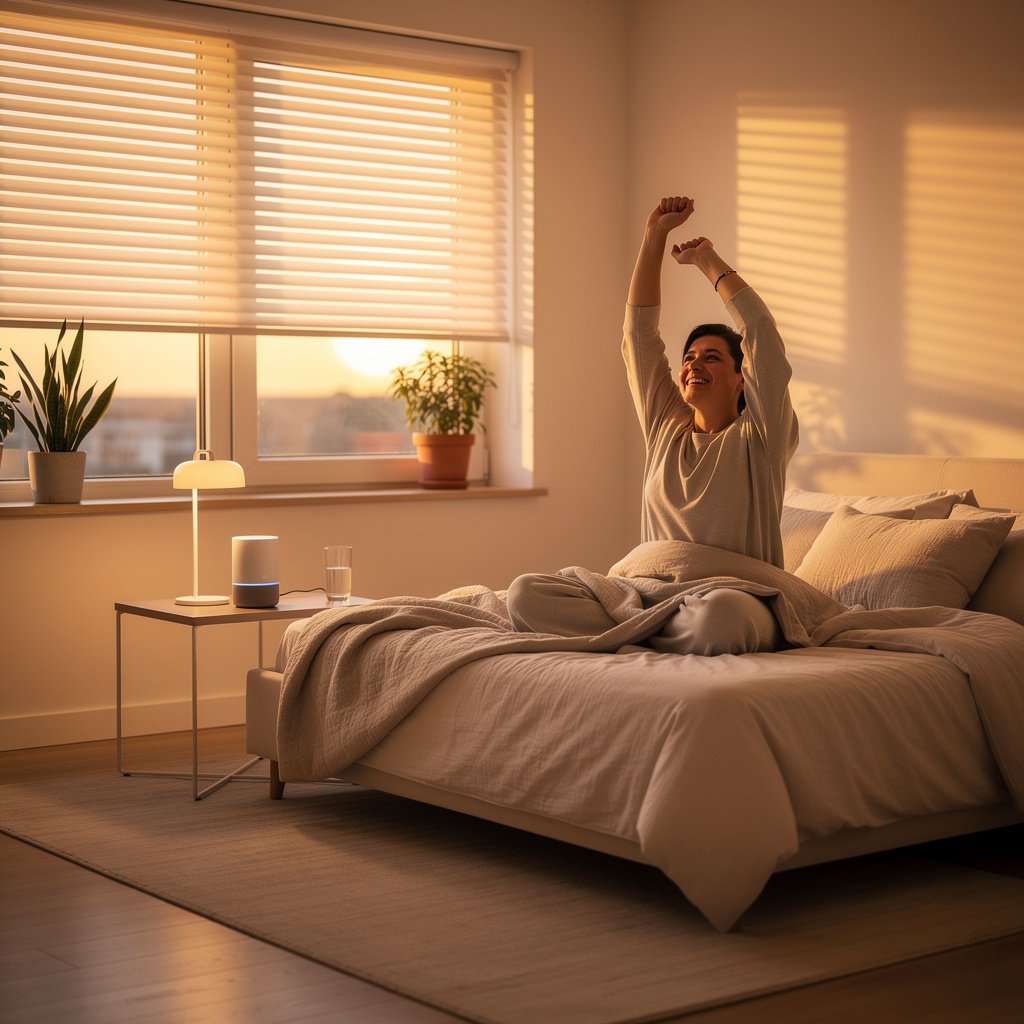
Trigger: 30 minutes before alarm
- Gradually increase bedroom light brightness over 30 minutes
- Shift light color from warm to daylight
- At alarm time: Open blinds, set lights to full brightness
- Optional: Start coffee maker
- Optional: Play gentle music or news
Middle-of-Night Scene
Trigger: Motion sensor after midnight
- Turn on bathroom light at 5%, warm red/orange
- Keep hallway dark or very dim
- Auto-off after 5 minutes of no motion
Why it works: Red/orange light doesn't disrupt melatonin production, making it easier to fall back asleep.
Bedroom Privacy Considerations
The bedroom is the most private room in your home. Consider these privacy options:
Cameras
Most people prefer no cameras in bedrooms. If you want a display:
- Google Nest Hub: Intentionally has no camera
- Echo Show 5: Has camera, but includes physical shutter
- Echo Dot with Clock: No camera, shows time
Microphones
Smart speakers listen for wake words. Privacy options:
- Mute button: All Echo and Google devices have physical mute
- Do Not Disturb: Silences notifications but still listens for commands
- Scheduled muting: Some devices allow scheduled microphone disable
- Local processing: HomeKit processes many commands locally
No Voice Alternative
If you prefer no microphones in the bedroom:
- Use phone/tablet for control instead of speakers
- Wall-mounted buttons (Hue Smart Button, Lutron Pico)
- Motion sensors for automatic lighting
- Scheduled automations that require no interaction
Sample Bedroom Setups by Budget
Starter ($75-150)
- 1x Echo Dot with Clock ($60)
- 2x Smart bulbs for nightstands ($30)
- 1x Smart plug for fan ($15)
Total: ~$105
Sleep-Focused ($300-500)
- 1x Google Nest Hub 2nd Gen with sleep sensing ($100)
- Philips Hue White Ambiance bulbs (4) ($100)
- 1x Hue Smart Button for nightstand ($25)
- 1x Smart plug for white noise machine ($15)
- IKEA FYRTUR blackout blinds ($130)
Total: ~$370
Premium ($800+)
- 1x HomePod Mini ($99)
- Lutron Caseta dimmer switches (2) ($140)
- Lutron Serena motorized shades ($400+)
- Hatch Restore 2 ($200)
- Ecobee room sensor ($40)
Total: ~$900+
Bedroom Automation Tips
Partner Considerations
Sharing a bedroom with someone who wakes at different times:
- Use individual nightstand lamps instead of overhead for wake-up
- Whisper commands or use phone app instead of voice
- Motion sensors should avoid triggering when partner is still sleeping
- Consider separate alarm schedules with individual routines
Kids and Babies
Special considerations for children's bedrooms:
- Baby monitors: Integrate with smart home for “baby crying” alerts
- Night lights: Smart bulbs at very low brightness for nighttime navigation
- Parental controls: Limit voice purchasing and explicit content
- Sleep timers: Auto-off for lamps after bedtime stories
Final Thoughts
A smart bedroom should enhance rest, not add complexity. Start with lighting and simple automations—the sunrise wake-up alone is worth the investment for many people. Add devices gradually and always prioritize sleep quality over feature creep.
The best smart bedroom is one you forget is “smart”—everything just works to help you sleep better and wake more refreshed.


